
AirBnB & Short-Term Rental Rules for Toronto Condo Owners (2026)
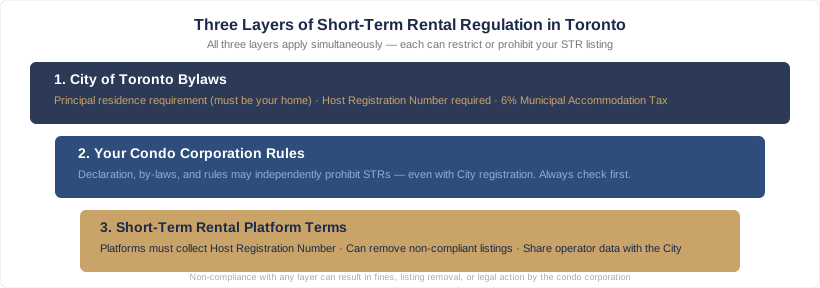
Short-term rentals — platforms like AirBnB and VRBO — are heavily regulated in Toronto, and the rules that apply to condo owners are more complex than most buyers realize. Operating a short-term rental in a Toronto condo requires navigating three separate layers of regulation: the City of Toronto's licensing and zoning regime, provincial legislation including the Residential Tenancies Act, and the rules of your individual condominium corporation. Failing to comply with any of these layers can result in fines, license revocation, and serious conflict with your condo board. This guide explains what Toronto condo owners need to know before listing a unit on a short-term rental platform.
The City of Toronto's Short-Term Rental Rules
Toronto regulates short-term rentals (defined as rentals of less than 28 consecutive days) under a framework that came into effect in 2021 and has been enforced with increasing rigor since. The key provisions are as follows.
Principal residence requirement: the most important rule. In Toronto, short-term rentals are only permitted in your principal residence — meaning the home where you actually live. You cannot buy a condo as a pure investment property and list it on AirBnB full-time. If the unit is not your primary address, operating it as a short-term rental violates City zoning bylaws.
Host registration required: anyone operating a short-term rental in Toronto must register with the City and obtain a Host Registration Number (HRN). This registration is renewed annually, requires proof that the unit is your principal residence, and is linked to the specific property.
Platform registration required: short-term rental platforms (AirBnB, VRBO, etc.) operating in Toronto must also be licensed with the City and are required to collect and remit a 6% Municipal Accommodation Tax (MAT) on all bookings. Platforms must also share operator data with the City.
Enforcement: the City actively enforces these rules, including through complaints from neighbours and condo boards. Non-compliant operators can face fines and may have their listings removed from platforms. Repeat violations can result in registration revocation.
Your Condo Corporation's Rules
Even if you comply with the City's licensing requirements, your condo corporation may independently prohibit or restrict short-term rentals through its declaration, by-laws, or rules. Many Toronto condo boards passed rules explicitly prohibiting short-term rentals following the 2021 regulatory changes — and some had restrictions in place long before that.
Check your governing documents first: before listing your unit, review your condo declaration and rules for any language restricting rental duration, prohibiting commercial use, or specifically addressing short-term rental platforms. If the language is unclear, consult a condo lawyer.
Boards can enforce their rules: condo corporations that prohibit short-term rentals have the legal authority to enforce compliance — through warnings, fines under their rules, or legal action. Multiple successful court cases in Ontario have upheld condo boards' rights to restrict short-term rentals.
Rules can change: if your building doesn't currently have a short-term rental restriction, the board can add one at any time with appropriate notice to owners. Investors should not assume that a building's current tolerance of short-term rentals means it will persist indefinitely.
Tax Implications of Short-Term Rental Income
Income earned from short-term rentals is taxable in Canada. It is typically treated as rental income and must be reported on your annual tax return. If the rental involves providing hotel-like services (daily cleaning, concierge service, linen changes), the CRA may treat it as business income rather than rental income, which has different tax treatment. GST/HST may also apply depending on the income level and nature of the service provided.
Short-term rental income also has implications for the principal residence exemption — if a property is used partly for commercial rental, the proportion of the gain attributable to the rental period may be subject to capital gains tax on eventual sale. This is a nuanced area that requires advice from an accountant experienced in rental property taxation.
Is Short-Term Rental Still a Viable Investment Strategy in Toronto?
For buyers who plan to live in the unit as their principal residence and rent it out only when they're travelling or temporarily away, short-term rental is legal and manageable — provided you comply with City registration requirements and your condo's rules.
For buyers looking to purchase a dedicated investment property for full-time AirBnB operation, the Toronto regulatory framework makes this strategy non-compliant with City bylaws. Enforcement has increased and the principal residence requirement is real. Investors in this category should either focus on long-term rental strategies or look at alternative jurisdictions where short-term rental regulations are less restrictive.
Frequently Asked Questions
Can my condo board stop me from doing short-term rentals even if I'm registered with the City?
Yes. The City's registration gives you permission to operate under municipal bylaws — it does not override your condo corporation's governing documents. If your condo's declaration or rules prohibit short-term rentals, City registration does not protect you from enforcement by your board. The two layers of regulation operate independently.
What is the Municipal Accommodation Tax and who pays it?
The MAT is a 6% tax on short-term accommodation in Toronto, added to the guest's bill. Licensed platforms like AirBnB collect and remit it on behalf of hosts automatically. If you are operating outside a licensed platform, you are responsible for collecting and remitting it yourself — which adds administrative complexity. Confirm current MAT rates with the City of Toronto directly, as these may change.
Can I do short-term rentals in my pre-construction condo once it closes?
Only if it becomes your principal residence and you comply with both City registration requirements and the building's rules. Pre-construction buyers who intend to rent short-term once the building closes should review the builder's Agreement of Purchase and Sale for any rental restrictions, check what rules the developer has registered for the building, and verify their eligibility for City registration based on principal residence status.
This guide is for general informational purposes and does not constitute legal, financial, or tax advice. Short-term rental regulations change frequently — always verify current City of Toronto bylaws, registration requirements, and your condo corporation's governing documents before listing any property on a short-term rental platform.
Ready to Take the Next Step?
Create your free, secure account at www.VIPCondosToronto.net for full MLS access, real-time sold data, and VIP pre-construction pricing and floor plans — the same tools our team uses every day.
For personalized advice on your specific Toronto buying or selling situation, contact Frank Merigliano and the VIP Condos Toronto team directly:
Phone: 416-885-0172
Email: frank@vipcondostoronto.net
Web: www.VIPCondosToronto.net
Frank Merigliano, Team Leader / Sales Representative, VIP Condos Toronto, RE/MAX PREMIER INTERNATIONAL INC., Brokerage — licensed since 1993, with RE/MAX since 1995, and a Top 50 RE/MAX team in Canada since 2015.
Have questions?
Want to know more about AirBnB & Short-Term Rental Rules for Toronto Condo Owners (2026)? Send me a message and I'll get back to you within 24 hours.