
Status Certificate Guide for Toronto Condo Buyers
A condo status certificate Toronto buyers request during a resale purchase is one of the most important documents in the entire transaction. This guide explains what a status certificate is, why it matters specifically for resale condo buyers, what's inside it, the standard fee and turnaround time, and the red flags a real estate lawyer looks for when reviewing one within your conditional offer period.
What Is a Status Certificate?
A status certificate (sometimes called an estoppel certificate in other provinces) is an official package of documents that a condominium corporation is required to provide, under Ontario's Condominium Act, confirming the financial and legal status of the building and your specific unit. It tells a buyer whether the building is financially healthy, whether there are any outstanding legal issues, and whether the seller owes any money to the condo corporation.
Why It Matters for Resale Condo Buyers
Unlike a freehold house, when you buy a condo you're also buying a proportional share of a shared corporation — its reserve fund, its liabilities, its rules, and its governance. A status certificate is the only reliable way to verify the building's financial health and legal standing before you remove your conditions and become legally bound to close. Skipping this review, or rushing it, is one of the most common and costly mistakes resale condo buyers make.
What's Inside a Status Certificate
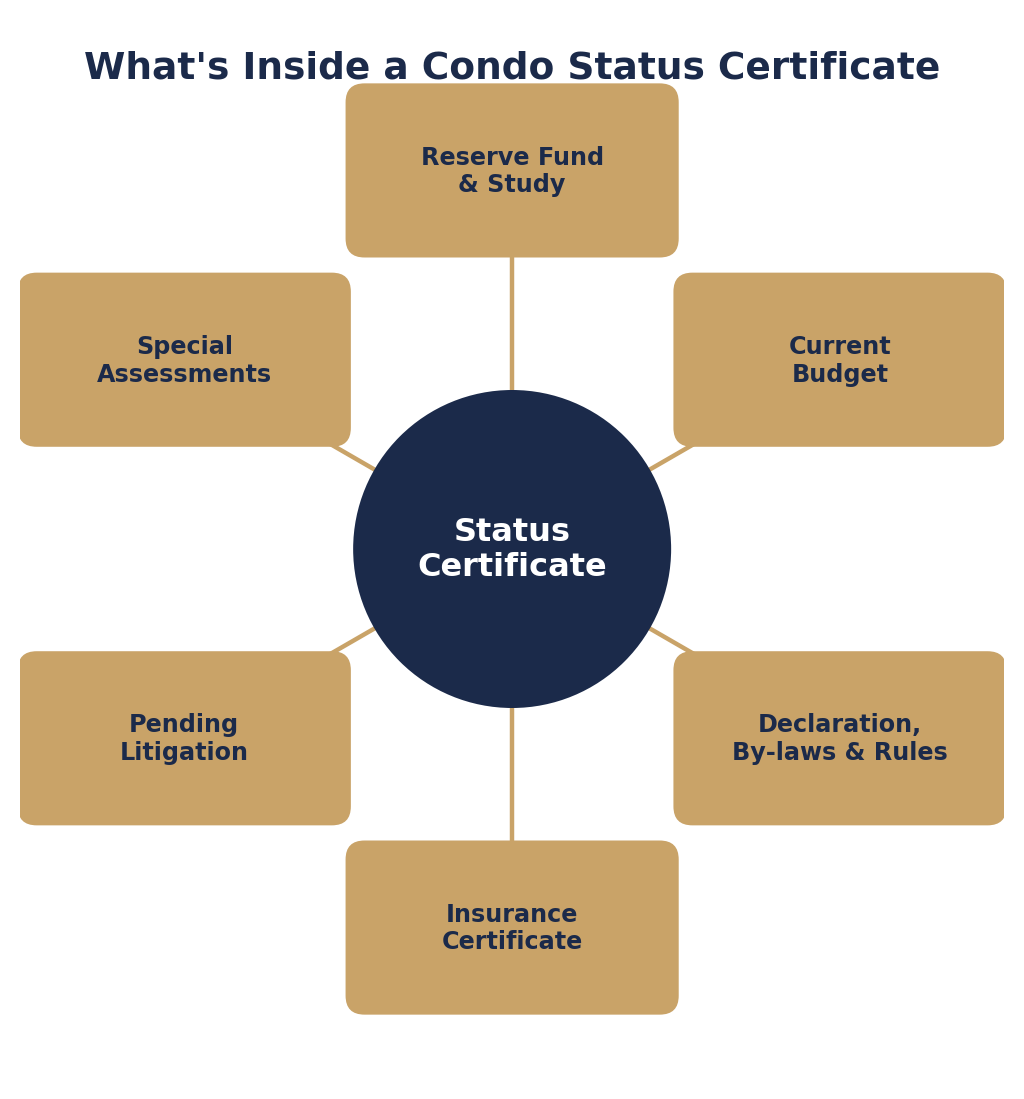
A complete status certificate package includes:
Reserve fund and reserve fund study: shows how much money the corporation has set aside for major future repairs (roof, elevators, garage, building envelope) and whether the fund is adequately funded relative to the study's projections.
Current budget: the corporation's annual operating budget, which indicates whether maintenance fees are trending upward and why.
Declaration, by-laws, and rules: the building's governing documents, including any restrictions on rentals, pets, short-term rentals, renovations, or use of common elements.
Insurance certificate: confirms the corporation carries adequate building insurance.
Outstanding litigation: discloses any lawsuits the corporation is involved in, which could create future financial exposure for all owners.
Special assessments: discloses any planned or already-levied special assessments — additional one-time charges to owners, typically for major unbudgeted repairs.
Status of the specific unit: confirms whether the seller is in good standing or owes any arrears in maintenance fees, which could otherwise become a lien against the unit.
Figure 1: The core components included in every Ontario condo status certificate.
Fee and Turnaround Time
The Ontario Condominium Act sets a maximum fee that a condo corporation can charge to produce a status certificate — currently roughly $100 — and a statutory turnaround time of approximately 10 business days from when the request and fee are received. In practice, many property management companies turn the certificate around faster, but you should build the full statutory window into your conditional period to be safe, especially for larger or self-managed buildings.
Have a Real Estate Lawyer Review It
A status certificate is a dense package, often running 100+ pages once financial statements and engineering reports are attached. Always have a real estate lawyer review the full package within your conditional offer period — not just skim the cover summary. A lawyer knows what reserve fund level is healthy for a building of that age and size, can interpret litigation disclosures in plain language, and can flag rule restrictions that might affect your plans (for example, if you intend to rent out the unit, including short-term rentals). Build enough time into your status certificate condition to allow for the request, the corporation's response window, and your lawyer's review — rushing this step defeats its purpose.
Red Flags to Look For
A lawyer reviewing a status certificate is typically watching for:
What Happens After the Review
Once your lawyer completes the review, there are generally three outcomes. If the status certificate raises no concerns, you simply waive your condition and the deal proceeds toward closing in the normal course. If your lawyer flags a moderate concern — for example, a maintenance fee increase that's reasonable given a documented upcoming repair — you may proceed but go into the purchase with clear eyes about future costs. If your lawyer identifies a serious red flag, you have the option to negotiate with the seller (for instance, a price reduction to offset a known special assessment) or to walk away from the deal entirely under your condition, provided the condition period hasn't expired. This is exactly why building adequate time into your status certificate condition matters: a rushed review removes your ability to negotiate or exit cleanly.
Budgeting Time and Money for the Process
Plan for the full cycle, not just the document fee. Your agent typically submits the request to the property management company on your behalf shortly after your offer is accepted, the corporation has up to the statutory window to respond, and your lawyer then needs time to actually read and assess the package before your condition deadline. For a straightforward, well-managed building this can move quickly; for a larger or self-managed building, or one with a recent change in property management company, it can take longer. When in doubt, negotiate a longer status certificate condition period upfront rather than trying to rush an extension once the clock is already running.
Frequently Asked Questions
Who pays for the status certificate?
The buyer typically requests and pays for the status certificate during the conditional period, since it's the buyer's lawyer who needs to review it before the buyer waives their condition.
How long does it take to get a status certificate?
The Condominium Act sets a statutory turnaround of approximately 10 business days from the corporation's receipt of the request and fee, though many buildings respond faster. Build this timeline into your offer's conditional period.
Can a deal fall apart because of the status certificate?
Yes. If your lawyer identifies a serious red flag — for example, a severely underfunded reserve, active litigation, or a major pending special assessment — you can use your status certificate condition to negotiate a price adjustment or walk away from the deal entirely, provided your condition is still open.
Does a new building have the same risks as an older one?
Newer buildings can still carry risk — for example, an underfunded reserve fund early in the building's life, or unresolved deficiencies with the builder — so a status certificate review matters for new and older condos alike.
This guide is for general informational purposes and does not constitute legal, financial, or tax advice. Always confirm current rates and rules with a licensed mortgage professional, accountant, or real estate lawyer before making a decision.
Ready to Take the Next Step?
Create your free, secure account at www.VIPCondosToronto.net for full MLS access, real-time sold data, and (where relevant) VIP pre-construction pricing and floor plans — the same tools our team uses every day.
For personalized advice on your specific Toronto buying or selling situation, contact Frank Merigliano and the VIP Condos Toronto team directly:
Phone: 416-885-0172
Email: frank@vipcondostoronto.net
Web: www.VIPCondosToronto.net
Frank Merigliano, Team Leader / Sales Representative, VIP Condos Toronto, RE/MAX PREMIER INTERNATIONAL INC., Brokerage — licensed since 1993, with RE/MAX since 1995, and a Top 50 RE/MAX team in Canada since 2015.
Have questions?
Want to know more about Condo Status Certificate Guide for Toronto Resale Buyers? Send me a message and I'll get back to you within 24 hours.