
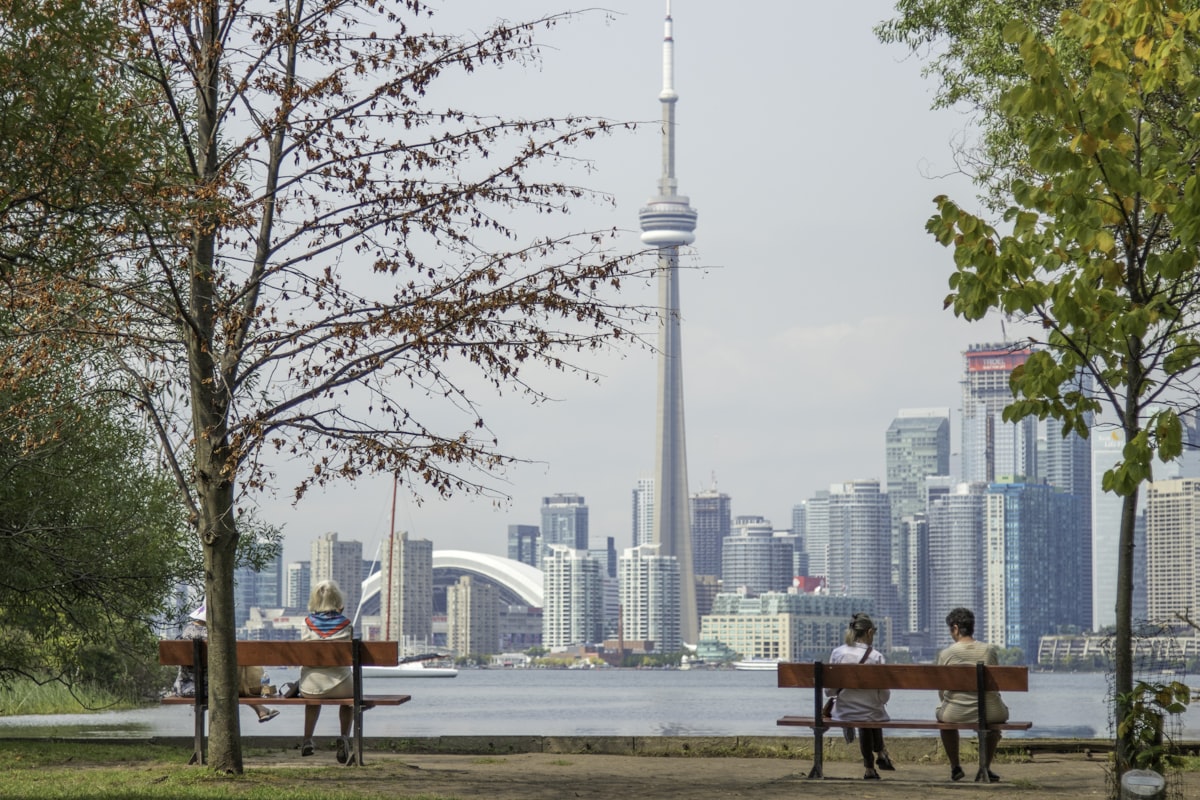
If you're not a Canadian citizen or permanent resident and you're considering buying property in Toronto or the GTA, you're navigating one of the most layered regulatory environments in Canadian real estate history. Since 2022, federal and provincial governments have introduced a series of overlapping rules — a federal ownership ban, a 25% provincial tax, and (as of 2025) an additional 10% municipal tax specific to Toronto. Understanding what applies to you, what exemptions exist, and what the combined financial exposure looks like is essential before making any decisions. This guide breaks it all down clearly.
The Federal Foreign Buyer Ban — What It Is
The Prohibition on the Purchase of Residential Property by Non-Canadians Act came into force on January 1, 2023 and has been extended to January 1, 2027. This is a federal law that, in its simplest form, makes it illegal for most non-Canadians to purchase certain residential properties in Canada.
The ban applies to residential properties with three or fewer dwelling units located within a Census Metropolitan Area (CMA — population of 100,000 or more) or a Census Agglomeration (CA — core population of 10,000 or more). Toronto and the entire GTA fall squarely within this definition. Violators — including purchasers and anyone who knowingly assists — face significant fines.
Importantly, the ban is a prohibition on purchase, not a tax. If you're subject to it and you proceed anyway, the transaction may be void and penalties apply. This is separate from the tax regime, which applies on top of the ban framework for those who are permitted to buy but are still classified as non-residents.
Who the Ban Affects
The ban applies to foreign nationals — broadly, anyone who is not a Canadian citizen, permanent resident, or person registered under the Indian Act. This includes people on temporary visas, most international students, tourists, and foreign investors with no Canadian immigration status.
What the ban does not cover:
Properties with four or more dwelling units — purpose-built rental buildings and apartment-style buildings above the threshold are not subject to the federal ban.
Vacant land zoned for residential or mixed use — foreign nationals can purchase vacant land freely, including for future development.
Properties outside Census Metropolitan Areas and Census Agglomerations — rural and smaller-community properties are not caught by the ban.
Exemptions from the Federal Ban
Several categories of foreign nationals are exempt from the ban and are permitted to purchase residential property in Canada:
Being exempt from the federal ban does not automatically exempt you from the provincial and municipal taxes described below. These are separate regimes with their own rules.
The Ontario Non-Resident Speculation Tax (NRST) — 25%
The Ontario Non-Resident Speculation Tax (NRST) is a provincial land transfer tax imposed on foreign nationals purchasing residential property in Ontario. It is completely separate from the federal ban — you can be exempt from the ban but still owe this tax.
The key facts for 2026:
The rate is 25% of the full purchase price.
It applies province-wide — not just Toronto or the GTA, but all of Ontario.
It applies to residential properties with 1 to 6 single-family residences, including condominium units, and as of March 2024, also standalone purchases of condo parking and storage units.
It does not apply to apartment buildings with more than 6 units.
The NRST is based on citizenship and immigration status — not where you live. A Canadian citizen living abroad pays no NRST; a foreign national living in Canada may owe it.
On a $900,000 Toronto condo purchase, that's $225,000 in NRST alone — before any other closing costs.
The Toronto Municipal Non-Resident Speculation Tax (MNRST) — 10%
As of January 1, 2025, the City of Toronto introduced its own Municipal Non-Resident Speculation Tax (MNRST) — an additional 10% on top of the provincial NRST. This applies specifically to properties within the City of Toronto boundaries (not the broader GTA). Properties in Mississauga, Brampton, Markham, Vaughan, or other 905 municipalities are not subject to the MNRST, only the provincial NRST.
There is no grandfathering for agreements signed before 2025 — if the closing occurred on or after January 1, 2025, the MNRST applies, regardless of when the agreement was signed.
The MNRST covers the same property types as the NRST: 1 to 6 residential unit properties, including condos and condo parking/storage units. Buildings with more than 6 units are exempt.
How the Taxes Stack Up: A Toronto-Specific Breakdown
For a foreign buyer purchasing a residential property within the City of Toronto, the combined tax exposure is significant. Here's how the layers add up:
LTT and MLTT figures are approximate based on graduated rates. All figures are illustrative — confirm exact closing costs with your real estate lawyer.
For a property in the GTA but outside the City of Toronto (e.g. Mississauga, Markham, Brampton), the MNRST does not apply — the foreign buyer exposure is the Ontario NRST (25%) plus the provincial LTT only, with no second municipal land transfer tax layer.
NRST and MNRST Exemptions
The following categories are exempt from both the Ontario NRST and the Toronto MNRST:
Canadian citizens and permanent residents — fully exempt regardless of where they live. A Canadian citizen living in another country still pays no NRST on Ontario property.
Ontario Immigrant Nominees — exempt, provided they certify they will apply for permanent residency and will use the property as their principal residence.
Protected persons — refugees with protection status under the Immigration and Refugee Protection Act.
Spouses of the above — a foreign national purchasing jointly with an eligible spouse (citizen, PR, nominee, or protected person) may be exempt, provided they certify the property will be their principal residence.
Note: as of March 31, 2025, the transitional rebates that previously allowed international students and foreign workers to recover the NRST after the fact have been eliminated. Applications filed after that date are no longer accepted.
Can You Get a Rebate?
There is one remaining path to recover the NRST and MNRST after paying it: becoming a permanent resident of Canada within four years of closing. If you paid the NRST or MNRST as a foreign buyer and subsequently receive your PR, and the property has been your principal residence, you can apply for a full rebate of both taxes — with interest.
This is meaningful for people who are actively on a PR pathway at the time of purchase. It is not available to those purchasing purely as foreign investors with no immigration intentions.
What Foreign Buyers CAN Do
Despite the restrictions, there are several paths that remain open to foreign nationals:
Purchase vacant land zoned for residential or mixed use — the federal ban does not apply to vacant land. This can include land for future development or construction.
Purchase properties with four or more dwelling units — purpose-built rental buildings above the three-unit threshold are not subject to the federal ban, and the NRST/MNRST do not apply to properties with more than six units. This makes larger multi-unit buildings a viable investment vehicle for foreign capital.
Purchase for development purposes — a formal development exemption allows non-Canadians to purchase residential property specifically for development (new construction, substantial renovation, or adding units). This is designed to encourage foreign investment in housing supply rather than speculative holding.
Purchase through an eligible structure — in some circumstances, purchases through corporate structures or partnerships with Canadian entities may alter the applicability of these rules. This is a complex area requiring legal advice specific to your situation.
What This Means for the Toronto & GTA Market
The combined effect of the federal ban and the NRST/MNRST regime has measurably reduced foreign buyer participation in Toronto's residential market since 2022, which was one of the stated policy goals. For most foreign nationals without an exemption, the economics of purchasing a Toronto condo or house simply don't work when 35% of the purchase price is payable in taxes at closing, with no guarantee of a rebate.
The practical market reality:
The buyer pool for Toronto resale condos and homes is now overwhelmingly domestic — Canadian citizens, permanent residents, and long-term residents on PR pathways.
Foreign investment in Toronto real estate has largely shifted to commercial, pre-construction development plays, vacant land, and larger multi-unit buildings — the categories that remain accessible.
For buyers in the process of immigrating to Canada — those on work permits actively pursuing PR, or nominees — the rules create a narrow but real window to buy before obtaining full PR, though the NRST still applies even if the ban does not.
The ban is currently set to expire January 1, 2027. Whether it will be extended again, modified, or allowed to lapse will depend on housing policy decisions in the period leading up to that date.
Frequently Asked Questions
I have a Canadian work permit. Can I buy a home in Toronto?
You may be exempt from the federal ban if your permit has at least 183 days of validity remaining at the time of purchase and this would be your first residential property in Canada. However, being exempt from the ban does not exempt you from the Ontario NRST (25%). You would still owe that tax at closing, plus the Toronto MNRST (10%) if purchasing within the City of Toronto — though you may be eligible for a rebate if you become a PR within four years.
My spouse is a Canadian citizen. Can we buy together?
Yes — a foreign national purchasing jointly with a Canadian citizen or permanent resident spouse may be exempt from the federal ban and from the NRST/MNRST, provided you certify the property will be your principal residence. This is one of the most common and cleanest paths for mixed-status couples. Confirm the exact documentation requirements with your real estate lawyer before closing.
Does the ban apply in Mississauga, Markham, or other GTA cities?
Yes — the federal ban applies wherever the property falls within a Census Metropolitan Area or Census Agglomeration. The entire GTA (Toronto, Mississauga, Brampton, Markham, Vaughan, Richmond Hill, etc.) qualifies. The Ontario NRST also applies province-wide. The additional 10% MNRST, however, is specific to the City of Toronto — it does not apply in the 905.
Is the ban permanent?
No. The current ban is extended to January 1, 2027. Whether it will be extended again or allowed to expire is a policy decision that has not yet been made.
If I pay the NRST now and get my PR later, will I get it back?
Yes — if you become a permanent resident within four years of your closing date and the property has been your principal residence, you can apply for a full rebate of the NRST and Toronto MNRST, with interest. The former transitional rebates for students and workers were eliminated March 31, 2025, so the PR pathway is now the only remaining rebate route.
Can a foreign buyer purchase a pre-construction condo in Toronto?
The ban applies at the time the property is transferred — i.e., on closing. Signing an Agreement of Purchase and Sale (APS) for a pre-construction unit during the sales period may not trigger the ban immediately, but the ban status and tax consequences will be assessed at registration/closing. If you are still a foreign national at the time of closing, the taxes will apply. This is an area requiring careful legal advice, particularly for pre-construction purchases with closings scheduled near the ban's expiry date.
Does the NRST apply to commercial property?
No — the NRST and MNRST apply to residential properties only (1 to 6 units). Commercial, industrial, and mixed-use properties without a residential component are not subject to these taxes.
What's the penalty for violating the federal ban?
Violations can result in fines of up to $10,000 for the purchaser and for any person or entity who knowingly assisted in the contravention. The court can also order the sale of the property.
This guide is for general informational purposes and does not constitute legal, financial, or tax advice. Always confirm current rates and rules with a licensed mortgage professional, accountant, or real estate lawyer before making a decision.
Ready to Take the Next Step?
Create your free, secure account at www.VIPCondosToronto.net for full MLS access, real-time sold data, and (where relevant) VIP pre-construction pricing and floor plans — the same tools our team uses every day.
For personalized advice on your specific Toronto buying or selling situation, contact Frank Merigliano and the VIP Condos Toronto team directly:
Phone: 416-885-0172
Email: frank@vipcondostoronto.net
Web: www.VIPCondosToronto.net
Frank Merigliano, Team Leader / Sales Representative, VIP Condos Toronto, RE/MAX PREMIER INTERNATIONAL INC., Brokerage — licensed since 1993, with RE/MAX since 1995, and a Top 50 RE/MAX team in Canada since 2015.
Have questions?
Want to know more about Foreign Buyer Ban & Non-Resident Speculation Tax: The Complete Toronto Guide (2026)? Send me a message and I'll get back to you within 24 hours.